

There are moments in a student’s education when learning shifts from acquisition to admiration, when something studied becomes something loved. This is often the moment when education begins to do its deepest work. Beauty has a peculiar power to bring about such moments. It quietly forms the soul long before a student knows how to articulate what has happened.
Classical education has always understood this. Beauty is a mode of knowing in its own right. To encounter beauty is to encounter order, proportion, and meaning, the realities that train students to recognize that the world is intelligible and worthy of care.
This conviction guided the creation of one of our high school offerings at Cincinnati Classical Academy: Introduction to Classical Architecture taught last semester by yours truly. The course was designed as a serious encounter with one of the most enduring expressions of the Western intellectual tradition. Architecture, after all, is thought made visible. It embodies a culture’s understanding of the human person and the natural world around us. It embodies the goods it chooses to honor publicly.
Students in the course studied the classical orders, principles of proportion and harmony, and the great works that have shaped cities across centuries. They read from Vitruvius, examined canonical examples from antiquity through the Renaissance, and learned how architecture communicates meaning through form. Yet the course was not limited to historical analysis. In the classical tradition, learning culminates in imitation and application.
The students’ final project asked them to do just that: to design a monument that would serve as a welcoming icon for our new Summit Park campus. This was a real-world design challenge with real constraints and real consequences. Students had to consider site, symbolism, scale, and civic purpose. They were asked to articulate what it means to welcome a visitor into a place devoted to classical learning, and how architecture might express the dignity of education itself.
What emerged from this project was both humbling and hopeful. The designs were thoughtful and marked by an evident desire to build something worthy of permanence. These works will be displayed in a gallery-style exhibition at Summit Park during a reception preceding our next Veritatis Splendor Speaker Series lecture on Tuesday, January 27, allowing the wider community to see what happens when students are entrusted with beauty.
That evening’s speaker, James McCrery II, is uniquely positioned to deepen this conversation. His lecture, “Renewing the Classical Tradition: Architecture as Cultural Recovery,” addresses questions that lie at the intersection of education, culture, and civic life. What does it mean to build classically today? How does architecture transmit culture across generations? In what ways can buildings contribute to moral and intellectual formation?
Mr. McCrery is among the leading classical architects working in the United States. His projects include major cathedrals and churches, civic monuments in the U.S. Capitol, commissions within the Supreme Court building, and university buildings across the country. He is also a tenured professor at the Catholic University of America, where he founded the concentration in Classical Architecture and Urban Design, and a former presidential appointee to the United States Commission of Fine Arts.
Mr. McCrery’s work stands as a reminder that the built environment can still aspire to clarity, harmony, and endurance. His lecture will invite listeners to consider architecture not merely as shelter or spectacle, but as a form of cultural memory—one that shapes habits of thought and feeling long after the scaffolding is gone.
The Veritatis Splendor Speaker Series exists to foster precisely these conversations: public reflections on truth, goodness, and beauty as living realities. The upcoming lecture, paired with the exhibition of student architectural work, offers a rare opportunity to see education at its best: students apprenticed to a tradition, guided by master architects of the past and present, learning not only how to analyze the world, but how to build it well.
Torches Up!
Mr. Michael Rose
Headmaster
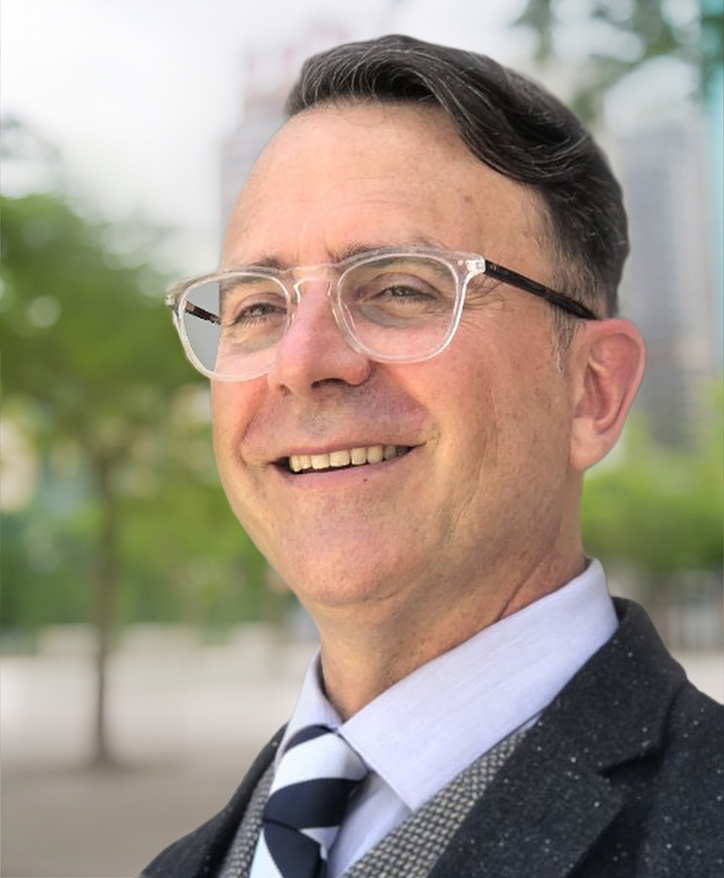
Mr. Michael Rose, Headmaster
Mr. Rose has taught various courses at Brown University, Cincinnati Moeller, and The Summit Country Day School. As a part of his degree work in education, Mr. Rose’s research interests included the Great Books curriculum, the Paideia teaching method, and the “effects of emerging digital technology on student reading, writing, and researching.” Read More