
Every architect learns early that the most important part of a building is the part no one will ever see. The foundation goes in first, poured deep into the ground, and then it disappears beneath everything raised upon it. Visitors admire the façade and the play of light through the windows. Hardly anyone thinks about the footings. Yet everything above depends on them, and the true test of a foundation comes only when the structure is complete and asked to bear its full weight.
I found myself thinking about foundations twice in the past week.
The first time was on Veterans Day. At both campuses, our students gathered to honor the men and women who have served this nation, and our musicians carried the day. The Schola sang with a clarity and reverence that filled the room, and our orchestra played with a poise that would have done credit to students twice their age. At the Lower School, our third and fourth grade music classes offered their own tribute, and I watched more than one veteran in the audience wipe away a tear as those young voices rose singing the military anthems with great gusto. I am grateful to Ms. Mears and Ms. Chiu, who prepared these programs with such care, and to every family who came to stand alongside our students in gratitude. A school that teaches its children to honor those who sacrificed for them is teaching something that will outlast any test score.
The second time was at our open houses. Last week brought two of them, including our first full open house for the Upper School at the Summit Park campus. An open house is the one evening of the year when a school must show every room of the house at once. Academics, Citadel Life, athletics, the fine arts, enrollment, communications, student services, and college counseling all stand side by side under one roof, and prospective parents walk the halls looking for the weak spot. I walked those halls with the same eye. I could not find one.
No, our school is not perfect. No school is, and any headmaster who claims otherwise deserves your suspicion. Voltaire was right that the perfect is often the enemy of the good, and what I saw on those two nights was very good indeed. I am proud of what our CLASSICAL faculty and staff have built, and of what they offer your children every single day.
What moved me most were the panels. Parents described what this school has meant to their families, and students spoke frankly about how it has shaped them. Their testimony served our prospective families well, and it served our leadership team just as well. People who spend their days solving problems rarely pause long enough to hear the fruit of their labor described aloud. That evening, they heard it.
I would particularly like to call attention to sophomore Vincent Peck’s plenary address at Summit Park. He spoke without notes, and he spoke well. Standing before a room full of strangers, Vincent explained what it means to be a CLASSICAL student. An education that stops at preparing a worker for future employment, he argued, has stopped far short of its purpose. A true education forms moral character and civic virtue. It teaches a young person to order his affections rightly, so that he learns to love what is good, beautiful, and true. Saint Augustine called this the ordo amoris, and C. S. Lewis borrowed the phrase in The Abolition of Man to describe the whole aim of education. I did not expect to hear it explained so clearly by a 16-year-old on a school night.
As I listened to Vincent and our parent panels, I had a feeling I have waited years to have. The foundation is laid. A building whose foundation is sound does not depend on any single beam or any single builder. It stands because it was built well, by many hands, on ground that holds. When a student can articulate the mission of this school more eloquently than I can, the mission no longer belongs only to those who first drew it up. It belongs to the whole community that lives it each day. That, to an old architect, is the surest sign that a foundation has done its work.
Torches Up!
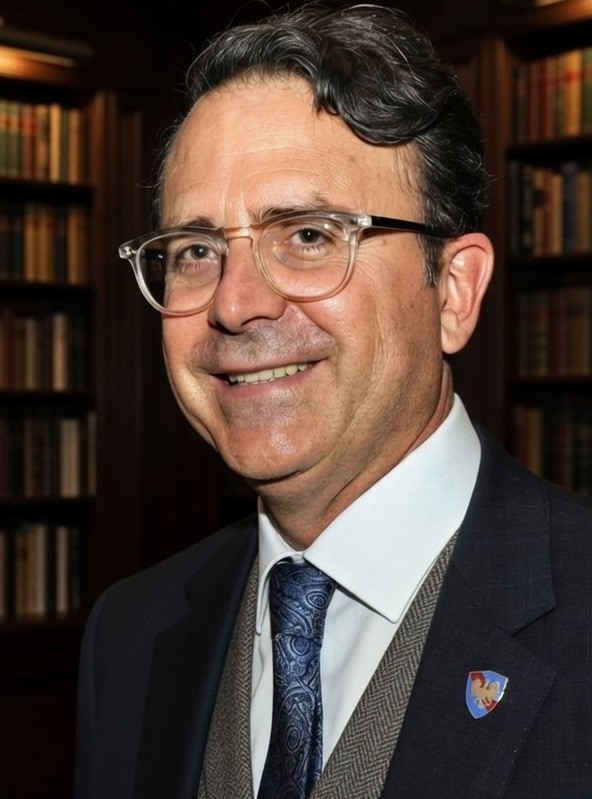
Mr. Michael Rose, Head of School
“Before opening CLASSICAL in 2022, Mr. Rose spent 17 years in education as a middle school, high school, and college instructor. He has taught architecture, grammar, composition, literature, logic, and rhetoric. His academic formation reflects the interdisciplinary spirit of classical education itself. A frequent lecturer and writer, Mr. Rose is the author of The Art of Being Human (Angelico Press, 2023) and The Subversive Art of a Classical Education (Regnery, 2026). His essays and public commentary explore the relationship between beauty, truth, and human flourishing in the face of technological distraction and cultural fragmentation.” Read More