

Summer vacation is almost here, and I want to say something to your children before they walk out our doors for the last time this year. I want to say it to you as well, because you are the ones who will shape what these next two and a half months become.
Go outside. Get your hands dirty. Make something.
I am serious, and I will explain why.
Josef Pieper, the German philosopher whose little book Leisure: The Basis of Culture ought to be required reading for every parent in America, drew a sharp distinction between two ways of spending time that is not occupied by work. The first he called idleness, which is not rest but a kind of restlessness: the filling of hours with stimulation so that one never has to be quiet, never has to think, never has to be alone with oneself.
The second he called leisure, which is something altogether different. Leisure, for Pieper, is not the absence of activity. It is activity undertaken for its own sake, freely, in a spirit of openness to the world. It is the condition of the soul that makes contemplation possible, and contemplation is the condition that makes genuine human life possible. We were not made to be productive machines. We were made to wonder. Summer, at its best, is the annual invitation to remember that.
The trouble is that idleness has never been easier to achieve or harder to recognize. A child can spend twelve weeks this summer in apparent repose, horizontal on a couch, bathed in the blue light of a screen, and arrive in August more exhausted, more irritable, and less himself than he was in May. That is not rest. It is the simulation of rest, and it does real damage. Our students have spent a year doing hard things: reading difficult books, learning Latin grammar, memorizing poetry, thinking carefully about ideas that resist easy answers. The mind that has worked that hard deserves genuine renewal. It does not deserve to be handed over to an algorithm.
So here is my summer counsel, offered without apology.
Read something long and good, something that requires you to sit still and follow an argument or a story for longer than you are comfortable with. If you are not sure where to start, ask your teachers before you leave. They will know.
Build something with your hands. Bake bread. Plant a garden. Learn to change a tire or hang a door or repair a fence. The body that has been sitting in a desk for nine months needs to remember what it is for. There is a reason Vitruvius insisted that architects must draw by hand: the hand teaches the mind things the mind cannot teach itself. Work with your hands and you will think differently.
Go somewhere without a device and remain there for a while. Visit a park, walk a trail, or simply sit on your front porch. The kind of attention demanded by the natural world is unhurried, patient, and receptive. It is also the same kind of attention that enables a student to read Homer carefully or follow a Socratic argument thoughtfully. In the end, the two capacities cannot be separated.
And get rest. Real rest, the kind Pieper meant: an afternoon where nothing productive happens and no one apologizes for it. An evening of conversation that goes longer than planned. A morning spent watching light move across a room. These are not wasted hours. They are the hours in which the soul recovers its capacity for everything else.
Cincinnati Classical Academy will be here in September, ready to begin again. The books will be harder, the questions sharper, the work more demanding than before, because that is how formation works. But the students who walk back through our doors having read and made and rested and wondered will be ready for it in a way that no amount of summer enrichment programming can manufacture. They will come back as themselves, only more so.
That is what we are after. That is what this whole enterprise is about.
Have a wonderful summer, CLASSICAL families. We will see you on the other side.
Torches Up!
Mr. Rose
Head of School, Cincinnati Classical Academy
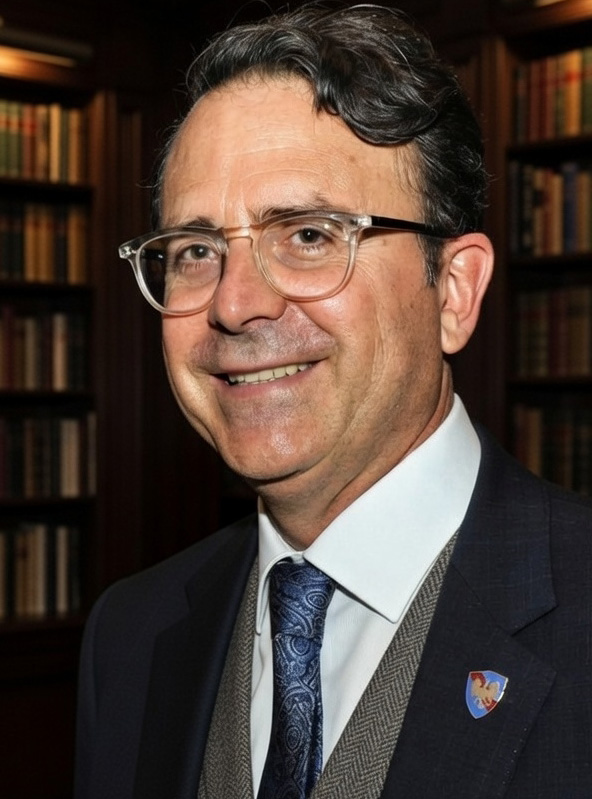
Mr. Michael Rose, Head of School
“Before opening CLASSICAL in 2022, Mr. Rose spent 17 years in education as a middle school, high school, and college instructor. He has taught architecture, grammar, composition, literature, logic, and rhetoric. His academic formation reflects the interdisciplinary spirit of classical education itself. A frequent lecturer and writer, Mr. Rose is the author of The Art of Being Human (Angelico Press, 2023) and The Subversive Art of a Classical Education (Regnery, 2026). His essays and public commentary explore the relationship between beauty, truth, and human flourishing in the face of technological distraction and cultural fragmentation.” Read More