

Last week, the Wall Street Journal published an article by Pamela Paul with a headline that caught my attention: “The Brutal Harvard Class That Suddenly Everyone Wants to Take.” The subject was Humanities 10, a yearlong course in which students encounter some of the great works of Western literature, from Homer to Joyce. Apparently, it has become one of the most sought-after courses among Harvard freshmen. This fall, applications outnumbered available seats by roughly two to one. (And, students are required to write an essay just to get into the class!) Only ninety students made it in.
I read the article with considerable interest and a certain amount of amusement. The course sounds remarkably familiar. Students read the great works of western literature, write essays regularly, attend every class, and leave their phones and laptops at home. The reading list moves from The Odyssey to Dante and eventually to Joyce’s Ulysses. At one point, writer Pamela Paul describes a philosophy professor walking before the assembled students, marker in hand, working through Jane Austen’s Emma and asking what Austen intended by giving us such an unlikable heroine. At the conclusion of the lecture, the students applauded.
Think about that for a moment: 90 Harvard freshmen applauded a lecture about Jane Austen.
One of the course’s leaders, Professor David Elmer, offered an explanation for its popularity. Many students, he said, have come to recognize that the wider culture is increasingly inhospitable to sustained reading and serious thought. They want something different. They want to spend time with difficult books, to encounter ideas that demand their attention, and to talk about those ideas with other people who have taken the trouble to read them. It is instructive to note that they are finding that experience in a Harvard classroom without screens.
I couldn’t help thinking about our own Upper School.
In Mr. Johnson’s ancient literature classroom, our ninth graders encounter Homer and Sophocles with pencils in hand. They linger over Odysseus’s cunning escape from the Cyclops, his struggle to resist the Sirens, and his long-awaited reunion with Penelope. They consider, too, the tragic choices that shape the lives of Sophocles’ characters. Later in the day, Mr. McGrory’s sophomores spend weeks with Chaucer and Shakespeare, returning to individual scenes and passages until they begin to understand what is happening beneath the surface of the language. Both teachers know their subjects deeply, and both have a genuine affection for the books they teach. I have watched them lecture to a room full of teenagers who are completely absorbed in what is being said. The lectures eventually give way to well-run seminar discussions, where the students are expected to make their arguments from the text itself. They cannot simply offer an impression or repeat something they have heard elsewhere. They have to read, think, and explain.
This is not unusual at CLASSICAL. It is what our humanities classrooms are designed to do.
The WSJ describes Harvard’s course as “brutal.” I suppose that depends on what one has come to expect from a college education. Reading a host of substantial books may seem extraordinary today, particularly when so much of American education has become accustomed to shortened readings, excerpts, summaries, and the ready availability of information on a screen.
At CLASSICAL, we have never been particularly interested in making difficult things seem easy. We want our students to become capable of doing difficult things well. That takes practice, patience, and a willingness to persevere when the initial enthusiasm wears off. A fourth grader memorizing twenty lines of poetry is learning something about attention and perseverance. A sixth grader drawing an Ionic capital to scale is learning that beauty requires discipline and care. And a student who spends several weeks working through a challenging passage in Shakespeare is discovering that a “great” novel or play often rewards the reader who is willing to return to it.
There is another point in the WSJ article that I find especially encouraging. These Harvard freshmen are actively seeking an experience that many schools have wholly abandoned. They want demanding reading, serious teaching, and the opportunity to discuss important books with one another. They are discovering that there is something deeply satisfying about an education that expects something of them.
That is what we have been building here at Cincinnati Classical Academy. Our students do not have to wait until they arrive at Harvard or Hillsdale to discover the pleasure and challenge of a serious humanities education. They encounter it in our classrooms every day with teachers who have devoted themselves to the study and teaching of these works.
So, the next time your son or daughter arrives home with a dog-eared copy of The Canterbury Tales and several more challenging pages to read before tomorrow’s class, remember that there are Harvard freshmen competing for the opportunity to do much the same thing. Encourage them to keep at it. Let them discover for themselves what a wonderful thing it is to spend an evening in the company of Homer, Chaucer, Dante, or Shakespeare.
Torches Up!
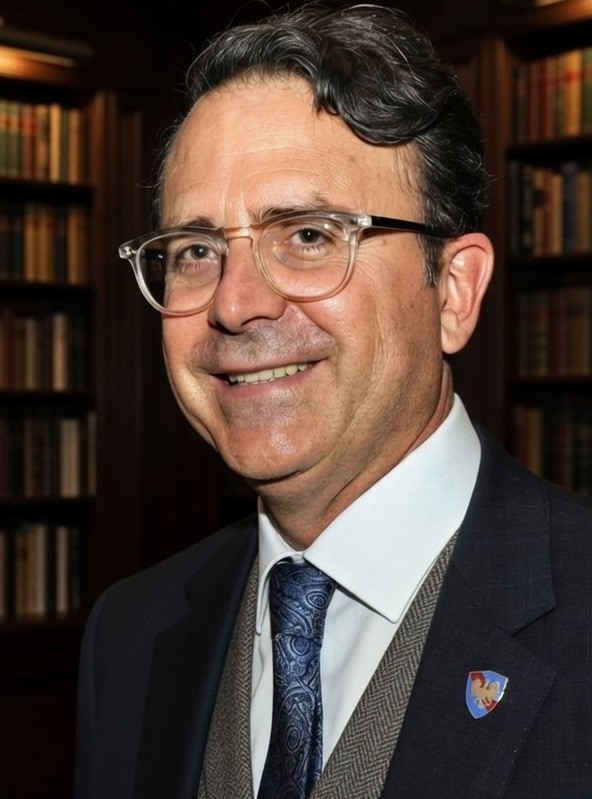
Mr. Michael Rose, Head of School
“Before opening CLASSICAL in 2022, Mr. Rose spent 17 years in education as a middle school, high school, and college instructor. He has taught architecture, grammar, composition, literature, logic, and rhetoric. His academic formation reflects the interdisciplinary spirit of classical education itself. A frequent lecturer and writer, Mr. Rose is the author of The Art of Being Human (Angelico Press, 2023) and The Subversive Art of a Classical Education (Regnery, 2026). His essays and public commentary explore the relationship between beauty, truth, and human flourishing in the face of technological distraction and cultural fragmentation.” Read More