

Last week, I was up later than I should admit, sitting on my back deck with our new yearbook, The Classical Scroll, open on the table in front of me. I was not only admiring the photography, which is lovely this year. I was studying names. Grade by grade, homeroom by homeroom, I read through every face and every name in this school from last year, testing myself the way a student might cram for an exam, until I was confident I could greet each returning student during this first week of the year and address them by the correct name without hesitation.
(I’d like to add that we’ve got approximately 150 new students this year out of our total population of 1,083. So, I will need another month at least to get the majority of the new students’ names memorized!)
I do this every summer, and every summer I am reminded of the same humbling truth. Three months away from our normal school days is just long enough to loosen a habit that took the better part of a school year to build. Names that were once instantly brought to mind begin to soften at the edges. So, I sit down with the yearbook and begin again, because knowing the name of every student in this building is not a task I am willing to let slip. It is a standing goal of mine as Head of School, one I return to every August with fresh resolve.
I think often about what it would have meant to me as a student to walk into a building each morning and be known. I don’t mean known generally, as one face among many, but known by name, by the adults responsible for my formation and by the man in charge of the whole school.
There is something affirming in hearing one’s own name spoken by someone who did not necessarily need to know it. It tells the student that he is not anonymous here, that his presence was noticed and expected, that the school he belongs to actually knows who he is. That confidence, built one morning at a time, becomes part of the foundation our students stand on for everything else we ask of them.
This is the work that all teachers on both campuses take up as well, focused above all on the students entrusted directly to their care. Our Citadel Provosts carry a wider version of the same charge, working to know every student within their citadel, not only those in their own classroom. It is a demanding standard, and I am grateful to lead a faculty that holds itself to it without complaint.
This year I am adding a new piece to that effort. Since I cannot yet bilocate, I have divided my week between our two campuses. On Mondays and Wednesdays, you will find me at the entrance at Siebenthaler, greeting students as they arrive. On Tuesdays and Thursdays, I will be doing the same at Summit Park. Friday mornings I alternate between campuses, circulating through the building to visit individual homerooms and spend a few minutes with students and teachers before the first bell rings.
And the handshaking habit does not begin or end with me. Every teacher on both CLASSICAL campuses shakes hands with their students as they arrive at the classroom door each morning, and in our Upper School, teachers do the same at the start of every class period throughout the day. What I am doing this year at our campus entrances is a variation on a practice that is already woven into daily life here. We think it matters enough to repeat constantly, in as many forms as we can manage.
A handshake asks something small but real of a student, whether a kindergartener or a sophomore. It asks them to stand up straight, meet an adult’s eyes, and offer her hand and her name in return if it is asked of them. That small exchange, repeated every day, builds the confidence to be seen, to be addressed directly, and to respond in kind. It is a habit of dignity, practiced daily until it becomes second nature. We believe that culture is built in exactly these small, repeated moments, morning after morning, year after year, and we are glad to keep building it with your children.
Torches Up!
Mr. Rose
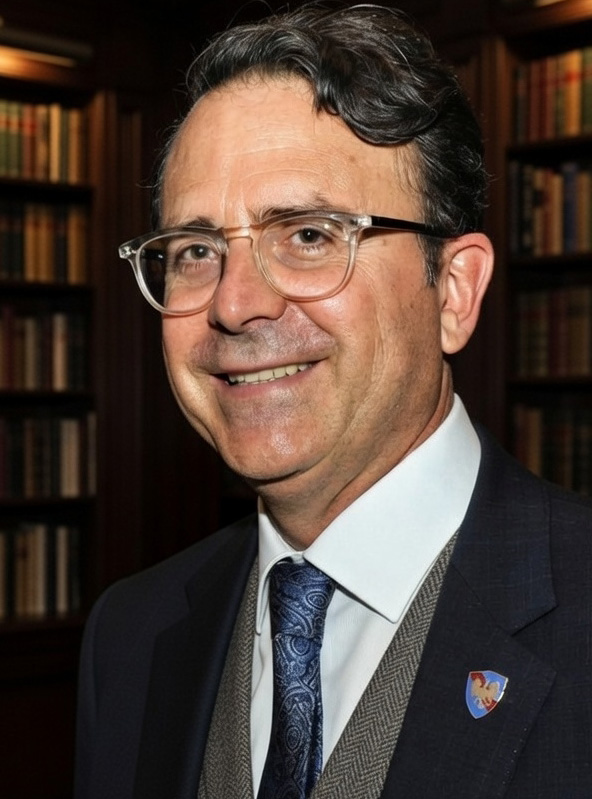
Mr. Michael Rose, Head of School
“Before opening CLASSICAL in 2022, Mr. Rose spent 17 years in education as a middle school, high school, and college instructor. He has taught architecture, grammar, composition, literature, logic, and rhetoric. His academic formation reflects the interdisciplinary spirit of classical education itself. A frequent lecturer and writer, Mr. Rose is the author of The Art of Being Human (Angelico Press, 2023) and The Subversive Art of a Classical Education (Regnery, 2026). His essays and public commentary explore the relationship between beauty, truth, and human flourishing in the face of technological distraction and cultural fragmentation.” Read More