

As we approach the end of the school year, we want to share a transition in school leadership. Mr. Joshua Wellen, our Director of Athletics, will step down from his position at the end of June. He has expressed a desire to return to full-time teaching at his previous school, and we wish him well in that return. The classroom is fortunate to get him back.
It is worth pausing to say plainly what Mr. Wellen took on when he arrived here two years ago.
Building athletics programs for a young school is not a straightforward assignment. There is no inherited infrastructure, no settled culture, no clear playbook. Mr. Wellen had to launch programs across three seasons essentially from the ground up, recruit and coordinate coaches, navigate the logistical demands of scheduling and eligibility, and do all of this while simultaneously overseeing the construction of a new athletics facility. That facility at our Summit Park campus now stands as a lasting contribution to what CLASSICAL is becoming. The foundation he laid is real, and the school is stronger for the work he did.
The question of what athletics are for is not a trivial one, and at CLASSICAL, we take it seriously. The ancient world understood something that the modern world has sometimes forgotten: that the formation of the body and the formation of character are not separate endeavors. When a student steps onto a field or a court wearing the Sentinel name, something is being asked of him beyond athletic performance. He is being asked to compete with honor, to lose without excuse, to win without contempt, to subordinate his own recognition to the good of his team. These are not peripheral virtues. They are the same virtues we cultivate in the classroom, in Citadel Life, and in every dimension of the CLASSICAL experience.
This is why we speak of virtue-based sportsmanship rather than simply good sportsmanship. The distinction matters. Good sportsmanship, as it is often conceived, is a set of behaviors: shake hands, don’t argue with the referee, help an opponent off the floor. Virtue-based sportsmanship expects all that but runs deeper. It asks not just what a student does in a moment of pressure, but who he is becoming through competition over time. It holds that athletics, rightly ordered, is a school for the soul — a place where courage, self-discipline, resilience, and justice are practiced under conditions of genuine difficulty. A student who learns to compete this way carries something with him long after the final whistle.
With that vision clearly understood, Cincinnati Classical Academy is now conducting a search for a new Director of Athletics, who will assume leadership of the Sentinel athletics program beginning July 1. We are looking for someone whose understanding of athletics aligns with our mission, someone who sees coaching and athletic administration not as ends in themselves, but as a form of formation.
The ideal candidate will bring demonstrated experience leading multi-sport athletic programs, including the operational and logistical demands of scheduling, compliance, and facility management. She or he will have the relational gifts to recruit and support coaches who share a high standard for both competitive excellence and character development. A familiarity with the culture of classical education, or a genuine readiness to grow into it, is essential. And the candidate will understand that the Sentinel standard on the field must be continuous with what students are learning to be inside our classrooms.
We are heartened by the strength of the candidate pool that has already emerged. The number and quality of applications submitted thus far gives us real confidence that we will find someone who can not only sustain what Mr. Wellen built but bring fresh experience and vision to the role. We look forward to introducing that person to the CLASSICAL community in the weeks ahead.
Torches Up!
Mr. Rose
Headmaster
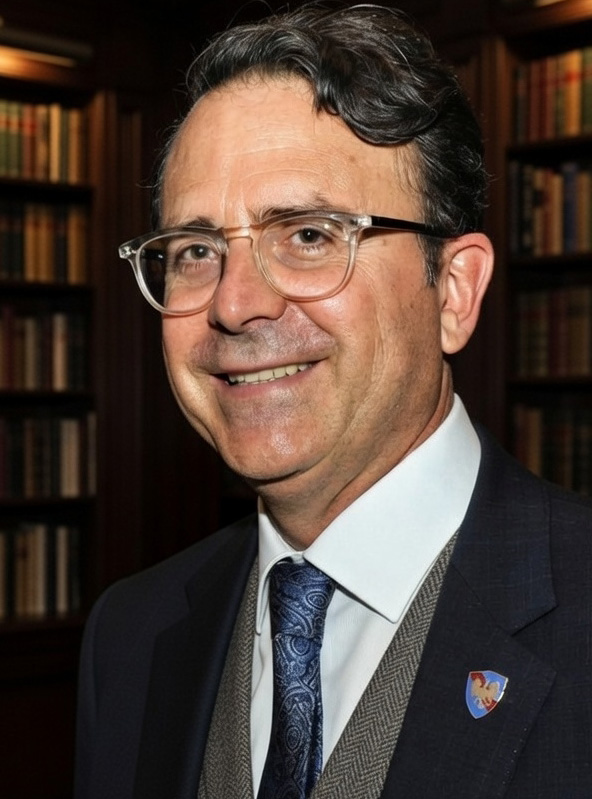
Mr. Michael Rose, Headmaster
Mr. Rose has taught various courses at Brown University, Cincinnati Moeller, and The Summit Country Day School. As a part of his degree work in education, Mr. Rose’s research interests included the Great Books curriculum, the Paideia teaching method, and the “effects of emerging digital technology on student reading, writing, and researching.” Read More