One of the most common questions parents ask, especially as our high school grows, is some version of this: How will Cincinnati Classical Academy prepare my child for the real world?
It is a fair question. It is also, I think, a revealing one.
For many schools, “preparation” means exposure: more electives, more technology, more specialization, more credentials stacked earlier and earlier. At Cincinnati Classical Academy, we begin from a different premise. We believe that genuine preparation begins not with early narrowing, but with deep formation.
As we add grades and mature as a high school, our academic program will continue to grow thoughtfully and deliberately. Yes, we anticipate an expansion of electives over time as already articulated in our 9-12 Prospectus (available here). You should expect additional offerings in the fine arts, advanced mathematics and sciences (yes, AP courses), writing and rhetoric, and carefully chosen courses that support interests in areas such as architecture, economics, business, and STEM fields. But our guiding principle will remain depth before breadth. Electives at CLASSICAL are not meant to fragment a student’s education into disconnected tracks; they are meant to extend and enrich a shared intellectual inheritance.
This same principle governs our approach to technology. A classical education is not opposed to technology; it is opposed to technological dependence. We aim first to form students who can read closely, write clearly, reason carefully, and think mathematically. These are the capacities that allow students to use technology wisely rather than be mastered by it. Colleges and employers consistently tell us the same thing: technical skills can be taught quickly; disciplined thinking cannot.
Outside the classroom, our vision is equally intentional. As our high school grows, so too will our clubs, activities, and extracurricular offerings. Some, like the Junior Classical League, will be school-sponsored from the outset; others will emerge organically from student interest, provided students can articulate a clear purpose and find a faculty mentor. This process teaches students that leadership is not about consuming opportunities, but about creating them.
Leadership, in fact, is woven throughout the life of the upper school rather than confined to a single title or résumé line. Through our Citadel Life system, athletics, fine arts, service initiatives, and public speaking opportunities, students are given real responsibility—first over themselves, and then in service to others. As the high school develops, we anticipate selective partnerships, conferences, and leadership experiences that align with our mission. But we are careful here. Our aim is not to produce busy students with impressive calendars, but formed young people with prudence, courage, and a sense of duty.
Parents often ask about career exploration and real-world exposure. Over time, particularly for older students, we do foresee opportunities such as job shadowing, internships, and vocational exploration. Yet we remain convinced that the best preparation for any career is a rigorous intellectual foundation. Graduates of Hillsdale College’s classical schools routinely attend institutions such as Hillsdale College, Notre Dame, the University of Chicago, Ohio State, the University of Dallas, Georgia Tech, the U.S. military academies, and many other selective public and private universities. They go on to careers in medicine, engineering, law, business, education, architecture, public service, and entrepreneurship. What unites them is not a narrow pathway chosen at age fourteen, but an education that taught them how to think and therefore how to adapt.
This is especially true for students with strong interests in STEM fields. Classical education does not compete with scientific or technical study; it undergirds it. Our emphasis on mathematics, logic, natural philosophy, and disciplined inquiry provides precisely the conceptual clarity that advanced scientific work requires. When students wish to pursue enrichment opportunities outside the school—summer programs, conferences, research experiences—we aim to support them through mentorship.
In all of this, our task is not to predict the future job market or chase every emerging trend. It is to form young men and women who are capable of freedom: free to think clearly, free to judge wisely, free to lead well, and free to serve others faithfully. A classical education does not prepare students for one moment in history. It prepares them for any moment.
That, we believe, is the most practical preparation of all.
Torches Up!
Mr. Michael Rose
Headmaster
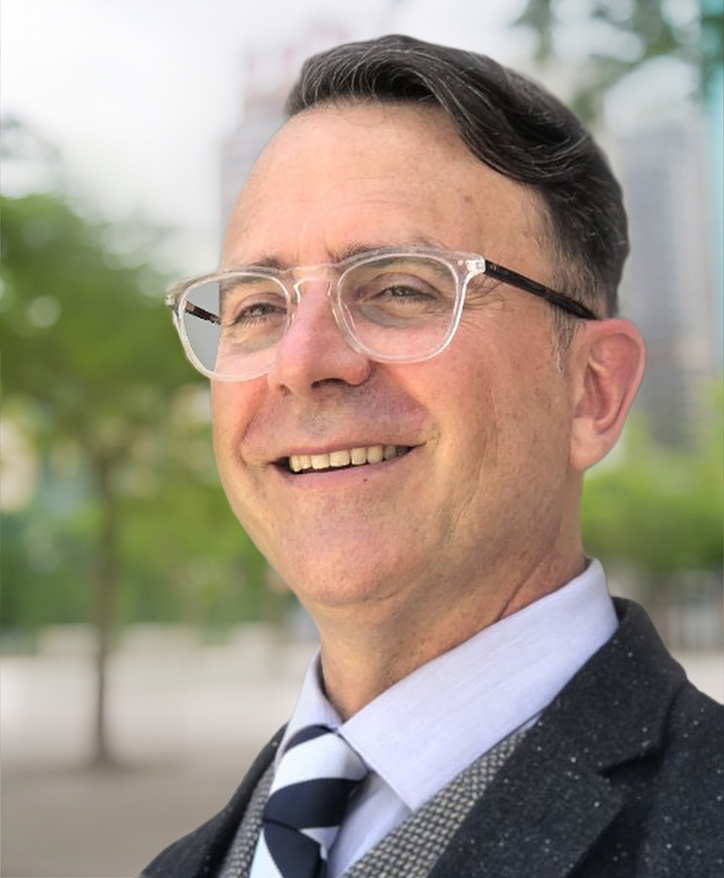
Mr. Michael Rose, Headmaster
Mr. Rose has taught various courses at Brown University, Cincinnati Moeller, and The Summit Country Day School. As a part of his degree work in education, Mr. Rose’s research interests included the Great Books curriculum, the Paideia teaching method, and the “effects of emerging digital technology on student reading, writing, and researching.” Read More